


The separation and sorting of material fractions is one of the most important steps in the recycling process. After materials have been mechanically processed and converted into defined grain sizes, they are sorted according to density, conductivity, magnetism, color, or shape. The aim is to obtain the purest possible recyclable fractions so that they can be further processed or sold economically.
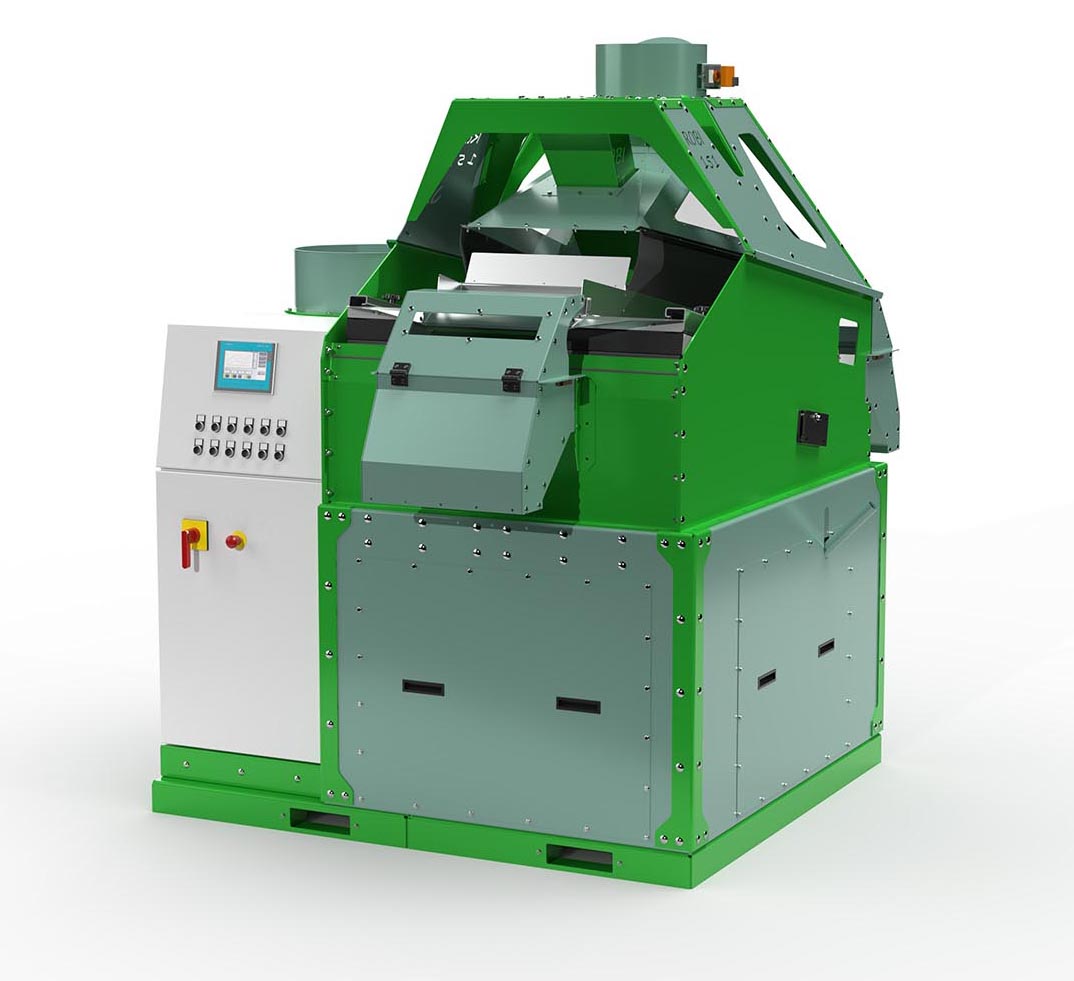
© GUIDETTI
Depending on the material and the desired purity, different technologies are used, including:
- Wind sifters & heavy material sifters
- Separation tables & sealing separation technology
- Magnetic and eddy current separators
- optical sorting systems
- sensor-based detection (e.g., NIR)
- float-sink method
Cable and electronics recycling
In the field of cable and electronics recycling, the separation of metal and plastic fractions is of central importance. The quality of the separation influences both the material yield and the market value of the recovered raw materials.
Modern separation systems are supported by suction, dust removal, and intelligent sensor technology to control fine particles and achieve stable purity levels. High-purity material streams also reduce the effort required in downstream processes such as processing, melting, or regranulation.
The combination of suitable shredding, defined grain size production, and clean separation technology design forms the basis for economical and sustainable recycling — and enables the recovery of valuable resources in the face of rising raw material prices and growing quality requirements.